Best Time for a Rome Bike Tour
Rome's cycling seasons are decided by heat and by rain on basalt setts, not by crowds. The months that work, the hours that work, and why winter is underrated.
Most Rome timing advice is about crowds. For a bike tour, crowds are close to irrelevant — you are moving, and the route already avoids the worst of them. Two other things decide your day.
Heat is the first one, and July is the problem
April, May, late September and October are Rome’s best cycling months. Comfortable temperatures, long enough days for an evening ride, and the parks at their best.
June is fine in the morning and hard by mid-afternoon. Take the earliest departure.
July and August are genuinely difficult. Rome in high summer is hot in a way that a bike does not help with as much as people hope — you are in direct sun on dark stone, stopping constantly at monuments with no shade. This is the one season where the tour you book should be chosen around the hour rather than the itinerary.
The two honest answers for a July trip:
- The night ride, which is why it sells so well in summer. Same city, no heat, and the traffic gone.
- A sunrise tour, which finishes before the day starts properly and delivers the monuments empty.
Both are better summer products than a midday highlights loop, and neither is a compromise.
Rain is the second one, and it matters more here
Wet weather does not merely make a Rome ride less pleasant — it changes what the ride is, because of the paving.
Sampietrini, the small squared basalt setts Rome uses, are polished by centuries of traffic and become genuinely slippery when wet. Tram rails add a second hazard in the same conditions. Operators do run in light rain, and the bikes have anti-puncture tyres and decent brakes, but a properly wet day turns the historic surface into something to be respected rather than ridden briskly over.
The practical approach: book, and watch the forecast. Rome tours are sold with free cancellation, so moving a booking costs nothing, while a wet day on setts costs skin. That is a far better strategy than trying to pick a dry week from three months out.
Winter is underrated
Rome’s winters are mild and frequently dry, the monuments are free of summer crowds, and the temperature suits cycling far better than July does. A clear January morning on the Tiber path is one of the better rides available anywhere in Europe at that time of year.
Two things to plan around.
Daylight. Sunset arrives early, which compresses evening rides and pushes sunset tours into the late afternoon. Ironically this makes a winter night tour easier to fit into a day — it does not eat your evening the way a July one does.
Layers. You are moving, often along the river, and Rome’s evenings drop away faster than the city’s reputation suggests once the sun is off the stone. Gloves matter more than a heavy coat.
The best hour of the day
Early morning, for reasons that have nothing to do with temperature.
Central Rome before about eight in the morning is a different city on a bike. The delivery vans have not started, the tour groups have not formed, and streets that are unpleasant at four in the afternoon are simply empty. It is the closest a day ride gets to the conditions the night tour enjoys.
Sunrise tours exist for exactly this and typically include breakfast, which is a sensible structure — you are up early, and you have earned it.
Late afternoon into sunset is the other good window, and the one for photographers. The light on travertine in the last hour is the best Rome offers, and the river bridges face the right way for it.
Midday in summer is the hour to avoid, which is the inverse of the museum advice most Rome guides give.
What about the seasons for the routes?
The parks are best in spring, when Villa Borghese and Villa Doria Pamphili are green rather than scorched. By August the grass is straw-coloured and the shade is doing all the work.
The Tiber path is good year-round and is the most weather-resilient ride in the city, since it is separated from traffic and mostly out of the wind.
The Appian Way is a spring and autumn proposition — it is unshaded, on dark stone, and punishing in high summer. It also has its own weekend traffic restriction, suspended in August, which makes the timing calculation genuinely different from a city ride; appianwaybiketour.com sets that out.
The short version
- April, May, late September, October — the best months, no qualification.
- July and August — ride at night or at sunrise, not at midday.
- November to March — better than its reputation, on a dry day, with gloves.
- Any wet day — move the booking. The setts are the reason, not the rain.
- Book with free cancellation and decide late. That is the whole strategy.
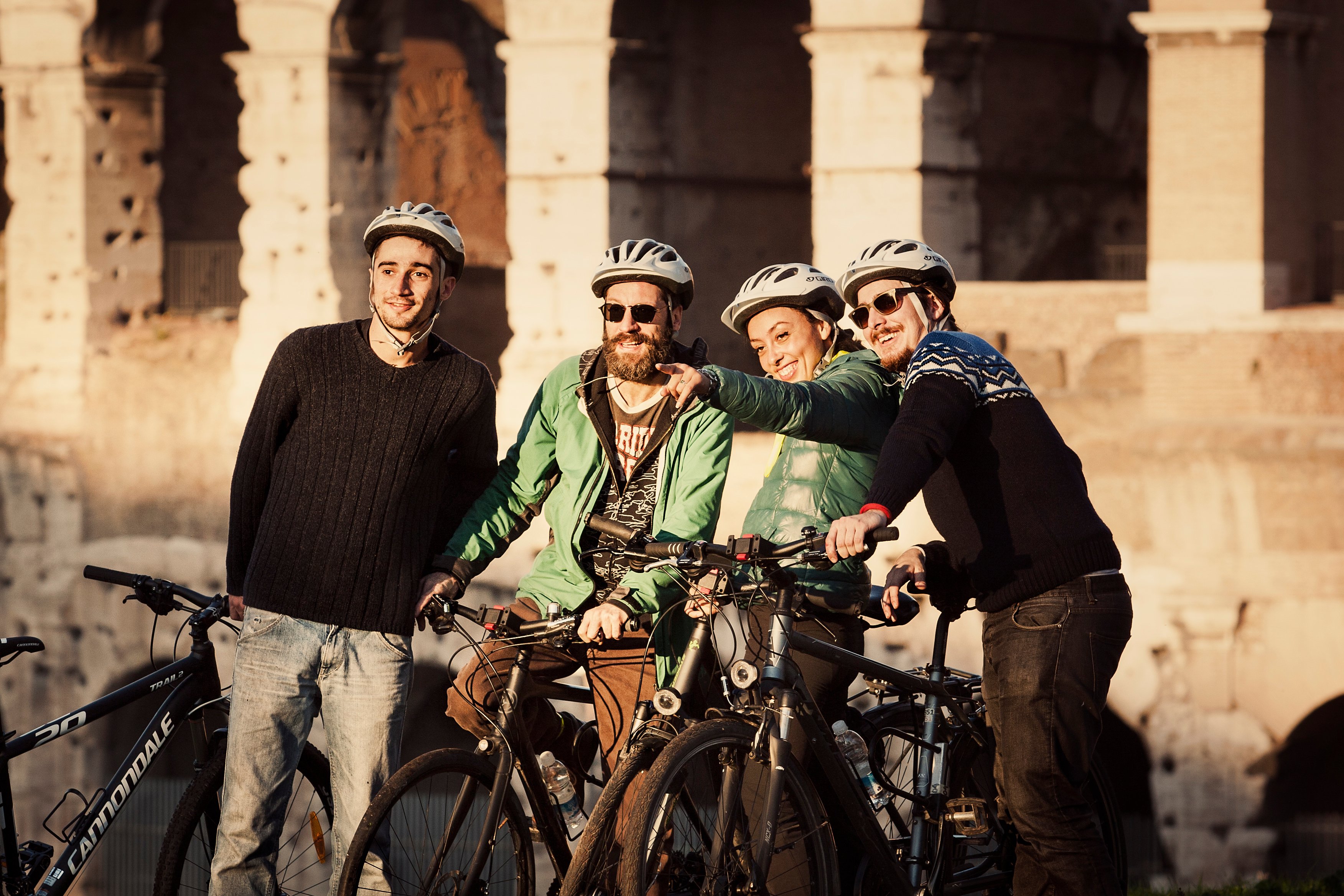
Book It, Then Watch the Forecast
Rome bike tours are sold with free cancellation, so the sensible plan is to book the ride and move it if the week turns wet. The city's most-booked tour is rated 4.9/5 by 1,869 verified guests, from about $75.
Check Availability & Book